


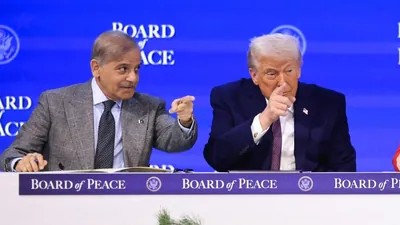
Pakistan is proving to be a major player in the world of diplomacy amidst the increasing conflict between the United States, Iran and Israel due to its close relations with both Washington and Tehran. The increased role played by the country as a possible mediator is opportune as the world is trying harder to de-escalate tensions in West Asia.
The Pakistan Army Chief Asim Munir was also said to have discussed the conflict with the US President Donald Trump and the prime minister Shehbaz Sharif had talks with the Iranian president Masoud Pezeshkian. Islamabad has also offered itself a neutral ground in case negotiations between the US and Iran take place as per the sources.
The diplomacy is coupled with the recent announcement by Trump that the US would pause attacks in five days against the Iranian energy infrastructure, which he said was a precursor to negotiation. He stated that constructive deliberations had occurred on a potential solution to enmity, but he did not disclose exact information.
Nevertheless, Iran has refused to have direct negotiations with the Trump administration claiming that the US made up the situation and tried to manipulate world markets. Iranian authorities also refused any high-level contact, although Trump indicated he had communicated with a top respected leader in Iran- an assertion later refuted by Iranian leaders.
With these contradictions, the Tehran admitted that it received messages by the friendly countries that wanted the negotiations, and it can be concluded that there might be the backchannel diplomacy. The balancing strategy that Pakistan has performed in this complicated geopolitical scene may be the key point in the future peacebuilding.