


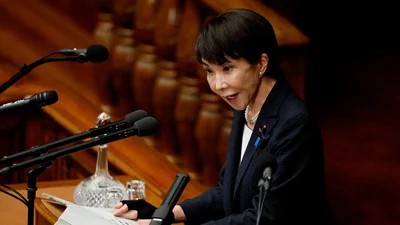
The declining birth rate in 2025 marked the tenth year of a falling birth rate in Japan, even highlighting the increasing demographic challenges facing Prime Minister Sanae Takaichi and her government. The initial statistics of the Health Ministry revealed that 705,809 babies have been born in the year, which is a decline of 2.1 percent compared to 2024. The numbers comprise the births of Japanese nationals in the country, foreigners giving birth in Japan, and those born outside the country to Japan parents.
Meanwhile, 1,605,654 deaths were recorded in 2025, slightly lower than it was in the previous year (0.8 percent). The entire Japanese population was estimated to be 122.86 million in February which represents a year on year decrease of approximately 580,000 or 0.47 percent.
As marriages increased by a low of 1.1 percent to 505,656 couples, divorces declined by 3.7 percent to 182,969 cases. Nevertheless, the slight rise in marriages has not been able to turn the overall declining trend in fertilities around.
With the world fourth-largest economy grappling with the lowest birth rate in the world, the declining and ageing population is heightening labour shortages, burdening social security and lowering the labour force to pay taxes. Japan already has the worst debt to GDP ratio of major economies.
The population distribution is also quite clear: there are almost 100,000 individuals aged 100 and above, and almost 90 percent of them are women. This is especially true of rural areas, where close to four million of the total number of homes nationwide are said to be abandoned and more than 40 percent of the municipalities are said to face the risk of extinction. Regardless of the policy efforts, it is a tough challenge to reverse the trend.
Join our whatsapp group for Latest updates
Click Here for Chhattisgarh News
Click Here for Entertainment News