


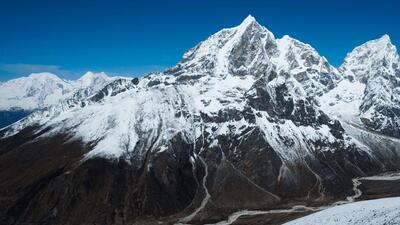
In a recent report by the International Centre of Integrated Mountain Development, it was clear that glacier melting has doubled in the Hindu Kush Himalayas since 2000 and with this came dire warnings of climate hazards, water security, and natural calamities in the area.
The results indicate that the rate at which glaciers are melting is increasing rapidly in the last twenty years with recent years being characterized by a high frequency of extreme melt offs. Scientists caution this trend has a high likelihood of raising the risk of catastrophic floods including glacial lake outburst floods (GLOFs), and also endangering long term water supply of billions of people reliant on Himalayan river systems.
The recent catastrophes spell out the increasing threat. Glacial activity was also associated with the 2021 Chamoli disaster that took the lives of more than 200 people in Uttarakhand. On the same note, the South Lhonak lake burst in 2023 in Sikkim and the Dharali flood of 2025 show that the Himalayan regions are becoming more susceptible to hazards caused by climate change.
The Hindu Kush Himalayas are also known as the Third Pole and they have the largest ice reserves besides the Arctic and Antarctic. The mapping of the glaciers indicates that the analysis by ICIMOD covered close to 63,000 glaciers with an area of close to 55,000 square kilometres with many of them being within areas highly affected by elevation-dependent warming-where higher the altitude, the faster the temperatures increase.
Records taken in the last 50 years indicate that about 89 percent of the years studied had net glacier mass loss and wastage almost two times more rapidly in the post 2000 period. Analysts say that unless there is immediate climate action, the area might be threatened by more disasters, disrupted ecosystems, and devastated agriculture, energy, and livelihoods in Asia.