


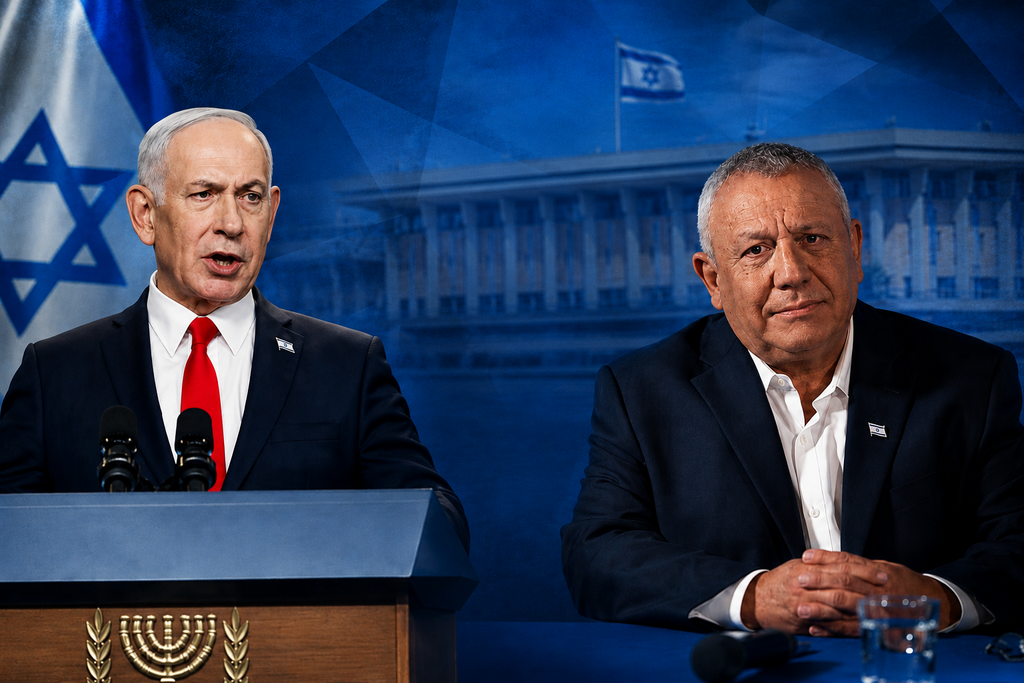
Israeli Prime Minister Benjamin Netanyahu, according to reports, is preparing to offer Yashar chairman Gadi Eisenkot the position of prime minister on a rotational basis, with Netanyahu willing to serve as a second prime minister amid the ongoing efforts to form a new government.
Media houses citing the reports said that Netanyahu was preparing to announce his willingness to enter a power-sharing arrangement with Eisenkot, although officials with the Prime Minister’s office remain divided over the proposal. According to local media houses, the offer is expected to be conveyed through unofficial channels, allowing Likud to maintain plausible deniability as divisions persist within the party over the terms of potential arrangement.
Eisenkot, however, remains skeptical of Netanyahu’s proposal and is continuing preparations to swear in the government next week. Reports also added that Eisenkot assured his coalition partners, Democrats chairman Yair Golan and Beytenu chairman Avigdor Liberman, that he would not form a unity government with Likud without their approval. Both leaders have signed a coalition agreement with Yashar and ruled out joining a government led by Netanyahu.
Meanwhile, B’Yachad chairman Naftali Bennett, who publicly advocated a unity government with Likud, could be a strong opposition to an Eisenkot-led government if it is formed before negotiations with Netanyahu are exhausted. Bennett earlier indicated his willingness to consider other less desirable alternatives if coalition negotiations with Likud fail.
The political maneuvering stems from recent elections where Nlneither of the political parties, Yashar or Likud, managed to win enough votes to form a government. Eisenkot faces a tight parliamentary deadline with his 28-day mandate from President Isaac Herzog set to expire December 6th.
Together, Eisenkot’s Yashar Party, Golan’s Democrats, and Liberman’s Yisrael Beytenu hold only 36 seats in 120-member Knesset. Even with the backing of Bennett’s party, the four-party bloc command only 48 seats, leaving Eisenkot short of 61 seat majority and dependent on support from either Netanyahu’s Likud party or ultra-Orthodox factions or other majority parties like Ra’am to form a viable coalition.