


India simplifies Visa rules: What students,bussiness travellers and tourists shoud know

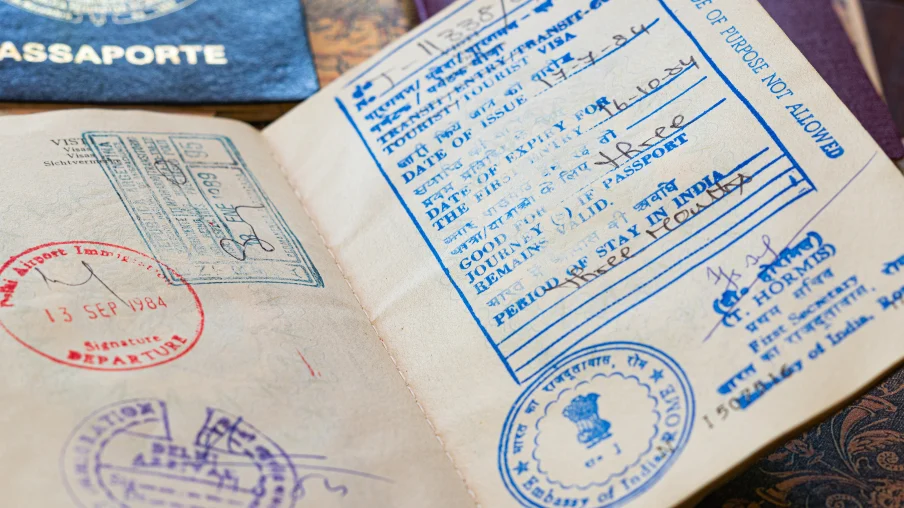
In a major overhaul, Indian government has reduced its main visa categories from 13 to 9. It has also reduced the information that applicants must provide in visa forms by 65% to 70%. The changes apply to foreign nationals who come to India for a visit, on study, work, or to do business.
What has changed?
The number of subcategories has been brought down to 23 from 49. According to the Ministry of Home Affairs, the latest round of changes was announced on August 27th, following an earlier exercise in October 2025, when the main categories were reduced from 22 to 13. The ministry said it aims to make the visa system more compact, coherent, and responsive for foreign visitors.
The Nine Categories
The 9 main categories covered under the overhaul are business, diplomatic, work, journalist, medical, official, student, visitor, and miscellaneous. Under the miscellaneous category, people of Indian origin, their spouses and children, dependents of foreign national on long duration visas and certain other groups are covered.
Tourist visa
The tourist visa will now be called the visitor visa. It covers a wider range of activities than tourism and is split into two types.
The V1 visa is for short stays, which covers business meetings, medical consultations, wellness retreats, short-term medical treatments, and short courses in Indian languages, music, art, and craft, granted for 30 days with multiple entries. The V2 visa is meant for longer visits, which covers everything under V1 along with mountaineering, and can be granted for 1, 5 or 10 years. For mountaineering, a 6-month multiple-entry visa will be available.
Medical visa
Known for its affordable treatment cost, the Indian government has retianed visa provisions for foreigner willing to get medical treatments done in the country.
The M3 visa is for the indeginous AYUSH treatment, while the M1 visa is for treatment other than AYUSH. Attendants get their own visas as well. M2 is for those accompanying M1 holders ,and M4 is for those accompanying M3 holders. These visas, including their electronic versions, will generally be granted for 1 year with multiple entries. The MHA says this will help patients who need repeated consultations or follow-ups and reduce the need to apply for a fresh visa during their treatment.
Student visa
The student visa is now categorized into two types, the S1 which covers school, graduate and postgraduate education, the S2 which covers PhD scholars, research students, visiting faculty, internships and exchange programmes. Students admitted through the Study in India portal may receive an e-S1 visa for up to five years or as long as the length of their course, whichever is shorter.
Bussiness Visa
The business visa is also divided into two, B1 which covers long-term license-based activities such as setting up an industrial commercial venture, B2 covers short-term contract-based activities like sports, filming, performing arts or conferences. Foreign engineers and technical experts hired by Indian companies can receive production investment visa, business visa under B2 category through e-visa system.
When will it start?
The new system is not yet operational. The MHA is updating its IT system and visas under the new structure and is expected to be issued by the end of 2026.
The 65% to 70% cut applies across all 23 categories and sub-categories. E-visas are currently available to nationals of 172 countries. Reduced categories do not remove eligibility rules or document requirements.