


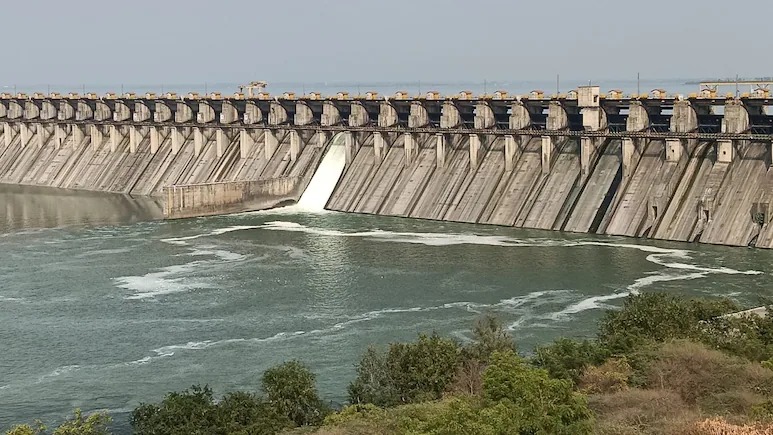
Water use and land use remain concerns and as such the changes to the proposal are insufficient. Protestors had suggested this might consume as much as 7 tonnes per minute of water to be used for cooling down the huge data centre, thereby subjecting the reservoir to strain.
Considering these apprehensions, Collector Karthikeyan noted that the apprehensions were more or less due to older technologies of cooling. This would, he said, be a closed loop dry cooling system, meaning that water would be pumped through pipes without evaporating as it cools.
The administration has set the maximum limit of water usage as 0.50 TMC per year, which is less than 1 per cent of the water storage in the reservoir. Floating solar panels would also help minimize the natural evaporation from the reservoir and thus save further water, Karthikeyan added.
Also issues about land acquisition have been tackled. The 568 hectares area needed for the onshore facility will be entirely in the ownership of an irrigation department belonging to the State and this land will not be paid for or acquired from the villagers as far as agriculture land is concerned.
The proposed 3,000 hectares of floating solar panels will fill up around 9 per cent of the reservoir area in the vicinity of the dam wall for the fishing society. The administration believes that over 90 per cent of the reservoir will still be open to fishing.
As far as work goes, official estimates place its total permanent job generation at about 2,800, plus thousands created locally by work on the project, and by its operation through the local supply chain.
The data centre will be directly connected to the high-tension electrical grid. Authorities said that the power that has been cuts for the rural homes and agriculture will continue to run as usual.
Weaning growing uncertainty among both farmers and fishermen will need transparency and proper execution of the new proposal to resolve some of the issues raised. The task for the administration will be to sustain the digital infrastructure development in Maharashtra, while protecting the region’s agricultural resources and livelihoods.