


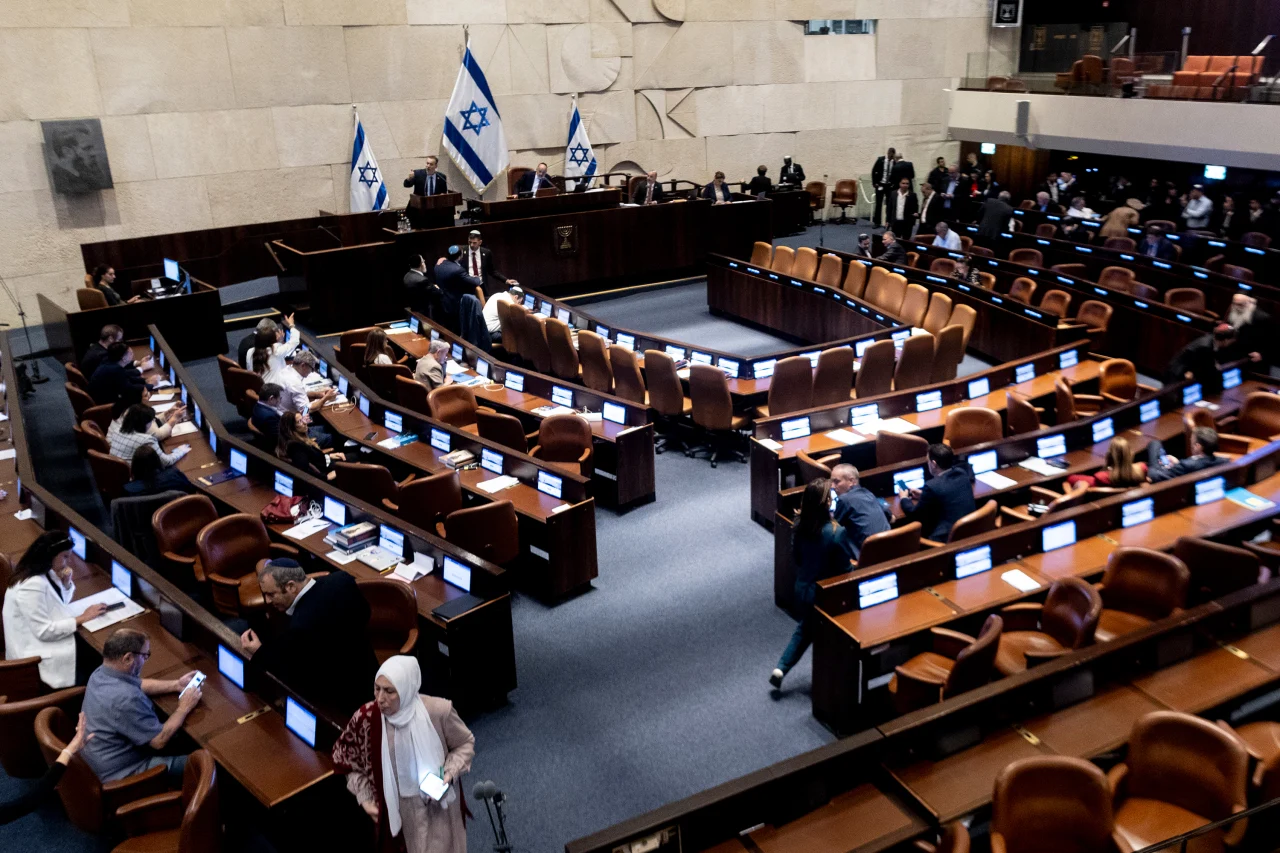
With more than 85 percent of the ballots counted, Prime Minister Benjamin Netanyahu’s right-wing bloc is set to take fifty-three seats, eight short of a majority and fifteen fewer than it has in the outgoing parliament. Netanyahu’s party is the biggest one of the group projected to secure 26 seats. It falls short of the sixty-one-seat threshold needed to form a government in the 120-seat Knesset.
Meanwhile, the opposition bloc led by Gadi Eisenkot now has 48 seats. Eisenkot’s party Yesh Atid is set to get 21 seats. Arab parties Ra’am and Joint List have 19 parties as per the votes tallied so far.
The last batch of ballots to be counted will be the 430,000 to 480,000 double envelopes which are used by voters who are exempt from having to vote in their place of residence. These include votes by soldiers, diplomats, patients in hospitals, prisoners and evacuees.
Under this system, voters place their anonymous vote in an inner envelope sealed and into an outer envelope with their personal details. The double envelopes are then transported to the Central Elections Committee where the staff checks the outer envelope against the registered polling stations to verify that a voter didn’t vote twice. Only then these envelopes are separated and counted.
What Are the Possible Scenarios?
But most of the votes counted in Israel’s elections has produced no clear winner, setting up weeks and possibly months of political uncertainty. Several outcomes and scenarios may come into play.
By Wednesday evening, the committee is expected to finish counting all of the election day ballots that were submitted at the polling stations.
Given the current deadlock, another scenario is a national unity government pairing Netanyahu’s Likud and one or more parties from the opposition, an option that would replace the current hardliner government.
Both Netanyahu and opposition leaders have ruled this out during the campaign, but may be the only way to avoid another election.