


World Bank warns of 800 Million job shortfall; educational leaders call urgent skill alignment

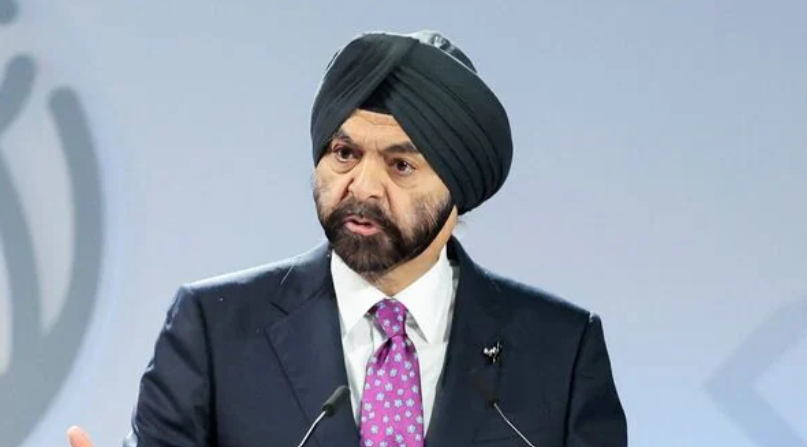
Issuing a stark warning regarding a looming global employment crisis, World Bank President Mr. Ajay Banga projected a shortfall of nearly 800 million jobs over the next 10 to 15 years. At the plenary assembly at the World Bank Group’s Annual Meeting in Bangkok, Banga urged international leaders to overhaul development financing to create sustainable employment opportunities for an expanding youth demographic.
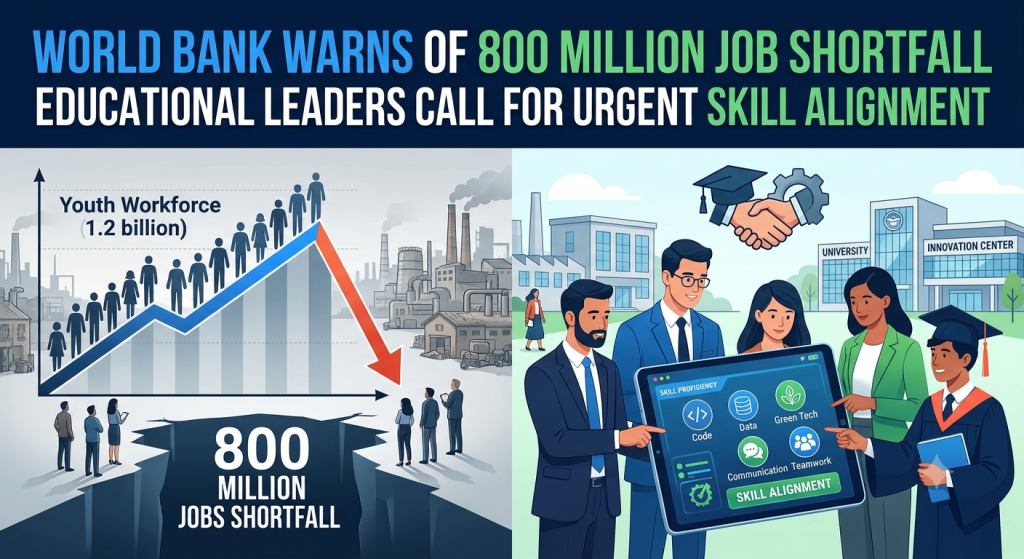
According to Mr. Ajay Banga, approximately 1.2 million young people will reach working age across the globe over the next decade and a half. Contrarily, the existing economic projections suggest that the global job creation will only generate around 400 million positions during the same timeframe, leaving a critical deficit that might threaten the economic stability and social cohesion in developing nations.
“Making scarce resources go further while helping countries create jobs at scale must be addressed together,” Banga stated as he outlined a strategy combining public finance, private investment, philanthropy and technology to accelerate economic development.
Implications for India: Industry Voices Weigh In
As the home to the world’s largest population, the global shortfall caries profound implications for India which can be both challenging as well as act as a strategic turning point.
Demographic Dividend Vs. Demographic Risk: World bank’s projected shortfall underscores a critical threshold for 7 to 8 million young Indian workforce; i.e. if India fails to generate productive, formal employment at scale, it will face the risks of transforming the demographic dividend into social and economic strain.
Echoing the demand for structural integration, Mr. Vikas Shukla, Founder of VONE India, said, “to absorb hundreds of millions of entering worker’s reliance on traditional corporate hiring alone will not suffice”. He further said that there was a need to develop robust digital infrastructure to encourage entrepreneurship and bridge the skill gap through technology-driven vocational programs.
Urgent Need to Fix Employability Gap: The crisis in India is worsened by the gap between degree holders and skill mismatch. High employment rates among educated graduates highlight that traditional academic degrees are not translating to job readiness. During a conversation with Mr. Arjun Mishra, founder of Orchid University, he highlighted that the World Bank statement is a wake up call for global higher education. “We cannot prepare students for yesterday’s economy. But universities must pivot towards work-integrated learning, continuous skill upgrading, and direct industry collaboration”.
Shift From Job Seeking to Job Creation: Corporate and public-sector hiring alone cannot absorb millions annually. India will have to foster MSMEs and entrepreneurships to enable youth to build micro-enterprises and self-sustaining ventures.
Accelerating Public-Private Partnerships: “Last year, we mobilised capital from investors in 110 countries. The United States, United Kingdom, and India led the way,” Banga said. For India, PPP models in education, energy, and technology are killing- blending government policy and funding with private sector execution and technology.
In Conclusion
With the world’s workforce ready to witness unparalleled growth, it is widely acknowledged that bridging such an immense employment gap would only be possible through flawless collaboration between international financial organizations, national governments, educational institutions, and private business sectors.
For India, Ajay Banga’s warning is a clear signal that have a trillion dollar economy is insufficient – it must be hob-lead growth.