


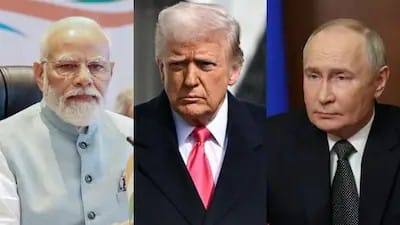
US Secretary of State Marco Rubio stated on Tuesday that President Donald Trump is seeking a 60-day window to research economic consequences of sanctions on Russia and tariffs on countries buying Russian energy – including India.
Rubio tells reporters before leaving for Uzbekistan and India on Saturday the proposed moves could impact the world economy and the U.S. economy “as well. He also admitted that Russia’s energy supplies will be a barrier for India to phase out energy imports.
The problem is that these sanctions were not singles that were only against the Russians. These cover several countries, including India, and others, said Marco Rubio, who said the Administration “should have some time to look at their cumulative economic effects”.
Trump on Friday granted an exception from the Lindsey O. Graham Sanctioning Russia and Iran Act, which would otherwise impose sanctions and tariffs, for the interests of the nation. The law contains broad provisions to target Moscow and taxes up to 100% on imports of Russia’s major customers of oil and gas, India and China, among other items.
The waiver provisions were supposed to give time for someone to “take time to study what the repercussions of the measures will be,” Rubio said, referring to some international crises that are ongoing. He spoke of overcrowding in energy supply due to the U.S.-Iran war and attacks by Houthis on Saudi Arabia, as well as the ongoing Russia-Ukraine conflict, as influencing factors on energy prices.
The secretary of state of the USA noted that India was diversifying the sources of its energy needs but was still relying on substantial amount of supplies from Russia. He said that transitioning energy arrangements would not be an easy transition to undertake, as there was not an outright end to the system.
Rubio also called India an important US partner, indicating that Washington would have to balance its economic and strategic interests in determining the steps it wants to take in India.
With an assessment period proposed to be 60 days, this may allow the Trump administration time to think about the impact of sanctions and tariffs on the energy market and international trade and relations with their key partners like New Delhi.