


The International Monetary Fund (IMF) expects economies in the Middle East to bounce back, but not in the medium term, the organisation’s regional chief said.
“We will not go back to the pre-war trajectory in the medium term because this shock will have a scarring impact on various sectors and also will disrupt a certain number of infrastructure and will require additional spending in order to increase resilience,” IMF regional director Jihad Azour told reporters.
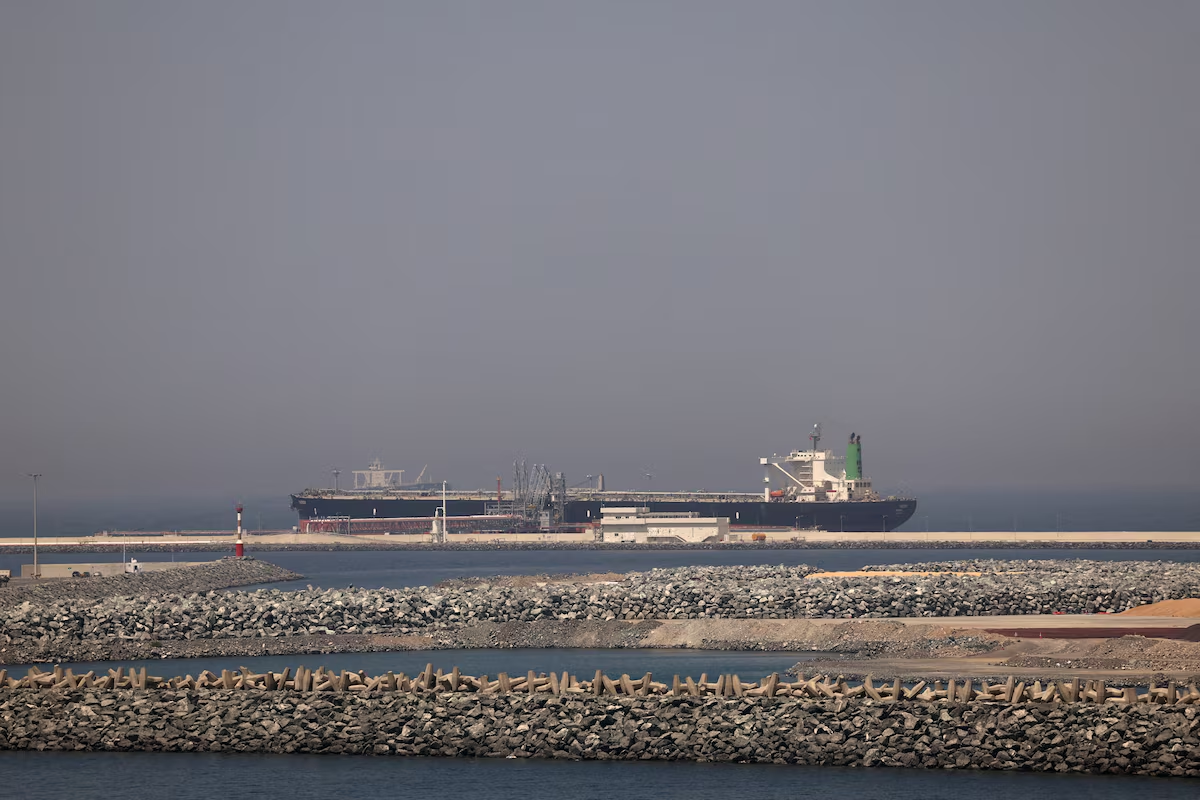
The statement comes as the IMF projects contraction in Gulf economies following months of war that began with US-Israeli attacks on Iran and has spread to Saudi Arabia and Yemen, with maritime energy traffic still impacted.
Iranian Parliament Speaker Mohammad Bagher Ghalibaf says Tehran does not seek an endless war or prolonged negotiations with the United States but will keep fighting until Washington accepts its demands.
At the Strait of Hormuz, two vessels, one hit by a projectile and the other by a sea mine, sank amidst ongoing attacks slow maritime traffic.
The Yemeni army claims more than 200 Houthi fighters are killed or wounded as heavy fighting continues across multiple fronts in Taiz. On Wednesday, fierce military confrontations across the southwestern province of Taiz erupted, as government forces continue their operations to reclaim contested positions and supply lines.
Meanwhile, several nations have issued a warning against travelling to Saudi Arabia in view of the escalated regional tensions.
Japan’s Foreign Ministry on Wednesday, raised an alert fore several northern and western regions from Level 1 to Level 2 on its 4 tier scale.
Australia and New Zealand also issued fresh travel advisories urging citizens to reconsider travel plans.