


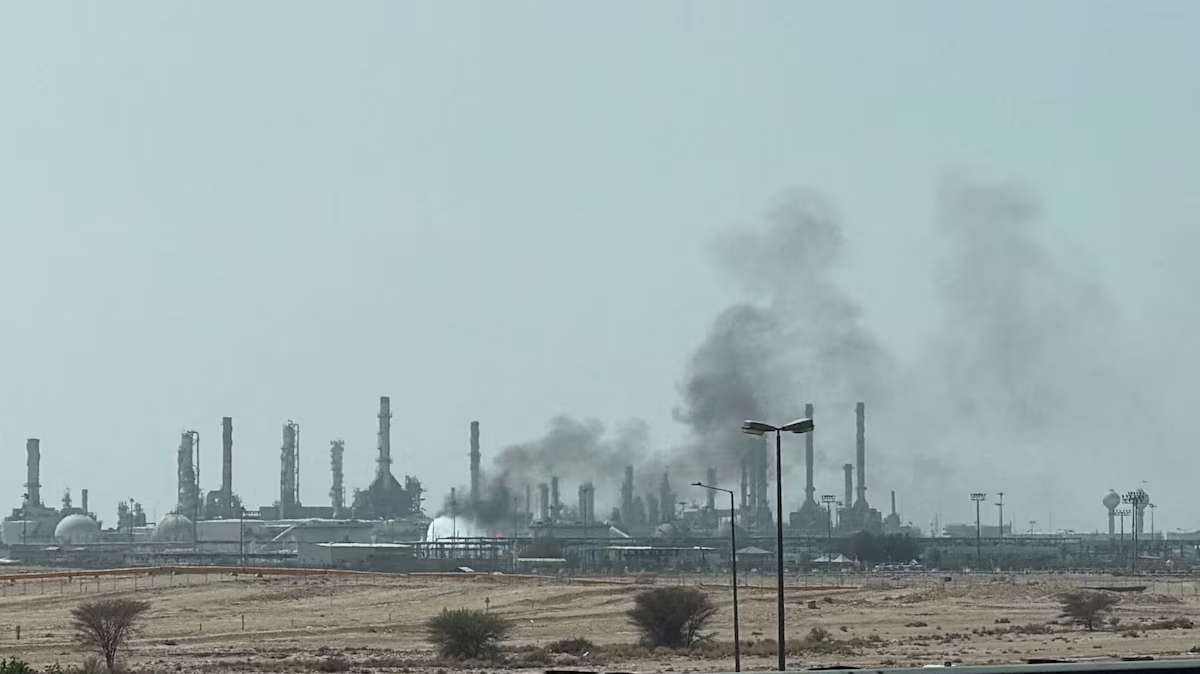
Oil prices fell following the surprise announcement by Saudi Arabia’s Aramco.
Brent crude futures fell 1 percent to $101.18 a barrel as of about 04:30 GMT, while US West Texas Intermediate crude was at $90.12 a barrel, down 1.03 percent, a few hours earlier.
Saudi Arabia-owned oil giant Aramco has surprised the Asian market by cutting prices for its flagship crude for Asian buyers, a move that nobody predicted.
Announcing its widest-ever discount since June 2020, Aramco has set the November Arab Light price for Asia at $5 a barrel below the Oman and Dubai average, down $3 from October. The heavier grades took a harder hit. Arab Medium and Arab Heavy for Asia were each cut by $5 a barrel.
Europe, on the contrary, has been paying more. Aramco raised its prices for Northwest Europe by $3 a barrel across all grades and left the prices for US buyers unchanged.
So Why The Change?
The war has changed how Saudi crude moves. Ever since the attack on the East-West pipeline across the Red Sea to the Yanbu port, Saudi Arabia has sold millions of barrels through ship-to-ship transfers outside the Strait of Hormuz.
As per analysts, this move helps Saudi Arabia win back Asian buyers rather than being a comment on oil prices themselves.
The cut comes on the heels of additional supplies. The G7, following a meeting on Sunday, agreed to release up to 100 million barrels from energy stocks. Meanwhile, OPEC+ core members agreed to hold production targets steady.
Brent for December still settled at $102.25 on Friday.
The so-called OPEC+ subgroup — Saudi Arabia, Russia, Iraq, Kuwait, Kazakhstan, Algeria and Oman — will meet again on November 1 to review conditions in the oil market.
The fighting with Iran, which began with US and Israeli attacks on February 28, has disrupted global oil supplies and driven prices higher.
The Group of Seven wealthy democracies said Friday that they plan to release 100 million barrels of oil and fuel products in the coming weeks, starting with “substantial” amounts of diesel.
Diesel prices recently hit record highs in the United States, squeezing farmers, truckers and consumers who depend on the fuel.
The G7 promised a “frontloaded substantial release” of diesel within the next 20 days and the rest over four months.