


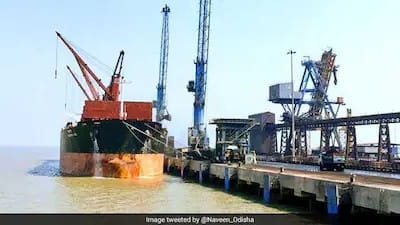
Adani Port and Special Economic Zone (APSEZ) operating Dhamra Port in Odisha has now moved its entire electricity usage to renewable energy, says the company. With the move, Dhamra is India’s first major private multi-cargo port to be fully run on renewable electricity, stated APSEZ.
The shift will be implemented in August 2026, as part of APSEZ’s long-term Net-Zero approach. The port processes over 48 million tonnes of cargo each year, and currently consumes over 90 lakh units of electricity every month from renewable sources.
APSEZ’s annualised renewable electricity consumption is now 108 gigawatt hours (GWh) in Dhamra. The move will be expected to lower emissions from electricity bought from the grid and will help to improve the environmental footprint of the port’s energy intensive activities, said the company.
It has been done via captive renewable generation, third party access and procurement of green power under the regulatory environment under Odisha.
APSEZ’s Khavda captive hybrid renewable power plant, in Gujarat supplies around 25-30% of Dhamra’s renewable electricity. Another 10-15% is procured from third parties and the remaining requirement is fulfilled through a Green Consumer catchment to the distribution utility in Odisha.
The port was connected and powered by renewable electricity to enable operations around-the-clock, such as cargo handling, storage facilities, activities connected to the rail and other critical infrastructure.
Dhamra, at the coastal Odisha state border, between the port cities of Haldia and Paradip, is one of eastern India’s deep-draft ports. The facility’s capacity is 60 million tonnes, with 48.8 million tonnes of cargo processed in the last financial year (until March 2026).
These renewable power investments are a component of APSEZ’s long-term net zero goals for its port operations, and represent its broader initiatives to decrease emissions.