


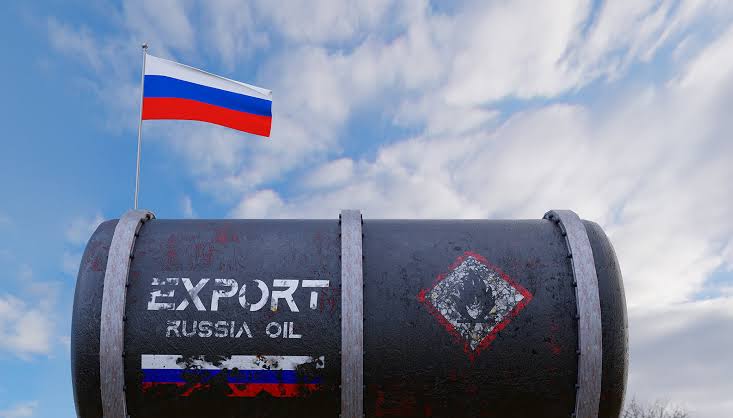
As President Donald Trump signed legislation that imposes new powers on him to tariff imports from key countries for Russian energy, pressure on the buyers of Russian oil and gas has also stepped up within the United States.
The Lindsey O. Graham Sanctioning Russia and Iran Act of 2026 adds additional powers to the US president regarding the imposition of sanctions for purchases of “significant amounts” of fossil fuels from Russia and Iran. The tariffs aren’t mandated by law, but instead the administration will decide which nations, and how much, will be penalized. This could affect two of the major importers of Russian crude, India and China.
However, India and China are two big buyers of Russia’s energy.
The law follows important changes in Russia’s energy trade since the beginning of the Ukraine war. Russian energy sanctions and restrictions sparked a quick drop in oil imports from Europe, Europe’s biggest markets.
India on the other hand, expanded its imports of cheaper Russian crude oil and forthrightly emerged as one of the crucial oil markets of Russia. Recently India’s crude imports from Russia have begun to fall, but the share of Russia yet remains significant for Indian crude needs. Russian crude imports fell 16.5% to approximately 2.1 million barrels per day in August 2026 and a corresponding drop in preliminary data showed there was declining oil supplies from Russia in September.
Russia has also had significant demand from China for fossil fuels. The two Asian economies have emerged as key to Russia’s success in continuing to export energy in the face of Western restrictions.
The new US law thus presents countries with a tricky dilemma between energy needs and access to the US market. Commerce minister Piyush Goyal said that India is already looking into the implications of this bill.
But, Washington has its own Russian supply lines to deal with.
The U.S. effort to punish Russian energy customers comes as the United States is at the same time continuing to rely on Russian supplies in some strategic areas.
According to the most recent data from the U.S. Energy Information Administration, operators of U.S. nuclear reactors paid for 26% of their foreign-origin uranium enrichment requirements from Russia during 2025. Of the total purchases, 18% came from France, 14% from the United Kingdom, and 8% from the Netherlands, while 23% of purchases were from the United States.
This is a sign of how difficult it is to cut Russian ties as Washington aims to curb Moscow’s oil and gas earnings. The nuclear sector is especially vulnerable as the ability to quickly switch from crude or gas suppliers to France if necessary does not exist.
Russia is also a major player in the global fertiliser market. Though there is significant overlap, US agricultural producers depend on imported fertilisers, although this varies widely depending on nutrient. According to USDA statistics, Russia has been a major exporter of certain products such as potash and fertiliser to the United States since 1921, when it was exporting 1 percent of total U.S. fertiliser consumption.