


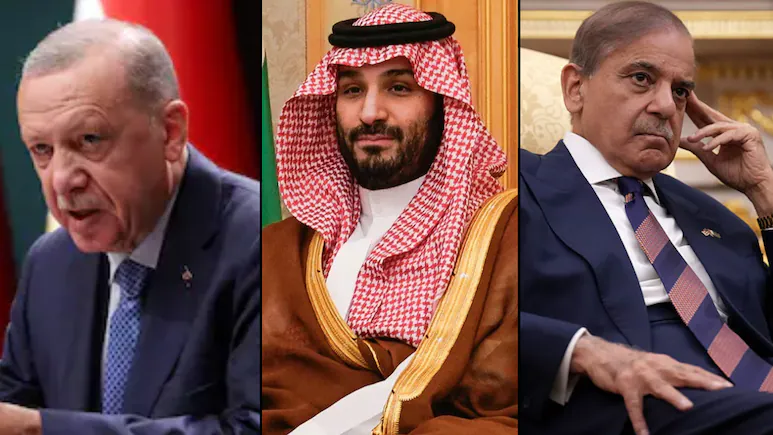
Pakistan, Saudi Arabia and Turkey signed a landmark security pact called the Mecca Joint Defence Agreement on Friday, to reinforce military cooperation and collective defence, as regional tensions over Israel’s push for peace with the Islamist militant group Hamas are heating up.
The deal was brokered at a high-level meeting between Saudi Crown Prince Mohammed bin Salman, President of Turkey Recep Tayyip Erdogan and Prime Minister Shehbaz Sharif in Saudi Arabia. Sitting with Sharif were members of a high-level visit that included the Pakistan Army Chief Field Marshall Asim Munir.
The contract agreement says an armed attack on anybody of the three countries will be considered an attack of all thus “strengthening” their sharing a spirit of collective security and deterrence, said Foreign Affairs Ministry. The agreement further aims to strengthen ties between the militaries, intelligence agencies, military training, joint exercises, and technology transfers.
The trilateral alliance involves nothing but Saudi’s finance strength coupled with Pakistan’s nuclear hi-tech capacity, in addition to the advanced defence industry and second biggest military force in NATO of Turkey. The deal comes against the backdrop of Saudi Arabia having been subjected to numerous threats for aircraft drones and missiles targeting its vital infrastructure, alongside escalating regional tensions by conflicts between Iran, the Gaza Strip and Lebanon.
In line with the terms of the new agreement, reports in Turkish media say the three nations are preparing to further tie up in the field of military technology, defence manufacturing and military strategy.
The deal represents a re-evaluation of the geopolitical landscape in the region, according to analysts who believe that as the regional conflicts continue, and global alliances are changing, countries are interested in deepening their cooperation and regional security partnerships. Mecca Joint Defence Agreement is likely to be paving the way for an architecture of security for the Middle East in the coming years.