


Monsoon havoc continues : Maharashtra death toll reaches 10, Delhi-NCR reels under flooding

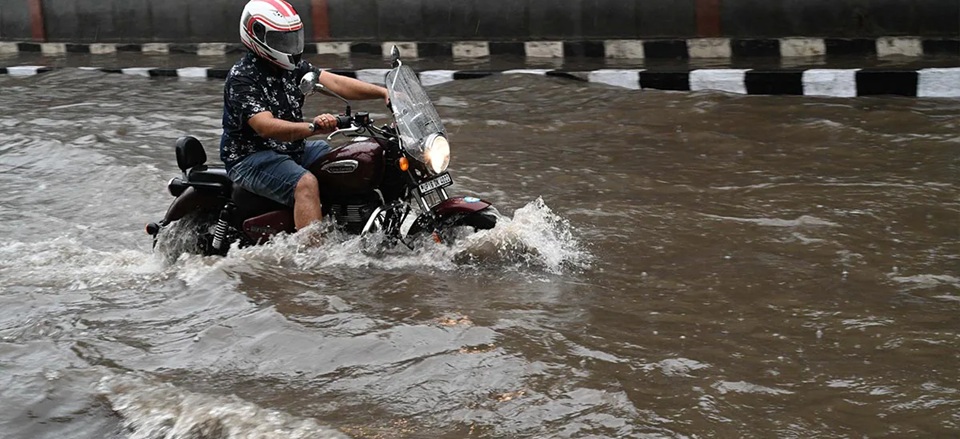
Heavy rainfall continued to batter several parts of the country, claiming lives and disrupting normal life in multiple states. Maharashtra remained among the worst-affected, with at least 10 rain-related deaths reported in Palghar district since July 1, including three fatalities in the last 24 hours.
In a separate incident in Maharashtra’s Jalgaon district, three teenagers drowned in a water-filled quarry near Amalner town on Tuesday evening. According to police, one of the boys reportedly slipped while attempting to take a selfie, following which the others entered the water in an effort to rescue him.
Amid recurring tree-fall incidents during the monsoon, the Brihanmumbai Municipal Corporation (BMC) announced that it will undertake a scientific study to identify the reasons behind such incidents, including whether ongoing road concretisation weakens tree roots.
The decision comes after at least three people, including an 11-year-old school student, lost their lives in separate tree-fall incidents in Mumbai over the past week.
The civic body also said it will begin annual inspection, maintenance and mapping of manholes from January every year to strengthen monsoon preparedness.
In Kerala, at least four people were killed and six others remained missing after a landslide struck the Kalladi tunnel construction site in Meppadi Grama Panchayat of Wayanad district on Tuesday. However, the rescue operations were underway to trace those still missing.
A cloudburst was reported in Himachal Pradesh’s Kullu district on Tuesday, causing flash floods that washed away one or two culverts and bridges constructed over a local drain. No casualties were reported in the incident.
Heavy rainfall also affected Delhi and Gurugram, leading to severe waterlogging and long traffic snarls across the National Capital Region.
On the Delhi-Jaipur highway (NH-48) near Narsinghpur, the main carriageway caved in due to incessant rainfall, forcing authorities to close two lanes and regulate traffic.
Officials have initiated measures to restore normal traffic movement and clear waterlogged areas.
The Centre on Tuesday said the country’s rainfall deficit has narrowed to 12 per cent, with the first week of July witnessing above-normal monsoon activity. The Centre also stated that an El Nino year does not necessarily result in below-normal rainfall.
According to the Prime Minister’s Office, Principal Secretary to the Prime Minister PK Mishra chaired a high-level meeting to review the progress of the kharif season and assess preparedness for the possible impact of El Nino on different sectors of the economy.