


Jharkhand peon fired after he took officer’s leftover biscuits to home, triggers corruption debate

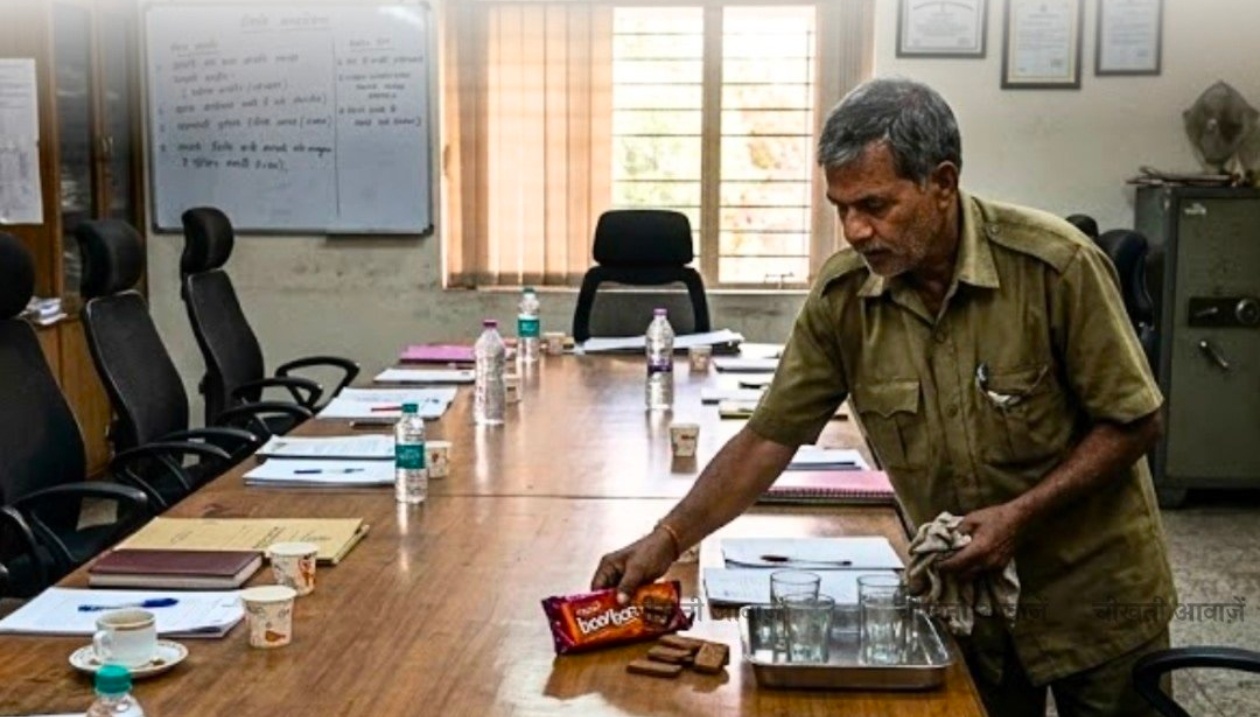
An officer’s sack of leftover biscuits has brought a controversy to the forefront where a government peon had been sacked for allegedly giving them to his kids at home. Many people have been demeaning the incident on social media, saying that they don’t understand the scale of punishment and as compared any other major corruption case that had been brought against the public servant.
The officials held a meeting and the peon was given biscuits that were not eaten, the claims said. The incident was reportedly treated as a “serious violation” of discipline, which got him fired from his job, according to police. The incident has raised questions about the severity of the punishment.
The incident has also sparked discussion on the way larger corruption cases are being handled throughout the country. In the past few years, authorities had lodged an FIR against eight individuals, including those of the temple, over the alleged embezzlement of donations at the Ram Temple in Ayodhya. The investigation is focussed around allegations of crores of rupees of donations that were misappropriated and it is said that CCTV footage was a crucial part of the probe into the allegations.
The Enforcement Directorate also had attached insurance policies to the tune of around Rs 3.66 crore during its investigation into the alleged fraud of Rs 1,266 crore by Advantage Overseas Private Limited and the State Bank of India. The agency has claimed that fraudulent trade transactions it suffered caused huge losses to the bank.
The District Programme Officer, Saran, in Bihar, was reportedly found guilty of bank transactions of over Rs 2.51 crore in his 32 months period despite receiving a total compensation of about Rs 27.43 lakh per annum as a Government servant. The investigation has suggested a thorough snoop on his finances, financial transactions and assets.
The difference between the harsh disciplinary measures in the few minor infractions and the lengthy investigation in the big money violation has led to a public discussion of accountability, proportionality and even the enforcement of the rules within any public institution.
No further clarification has yet been given by authorities about the removal of the peon and investigations in the cases of major corruption are continuing.