


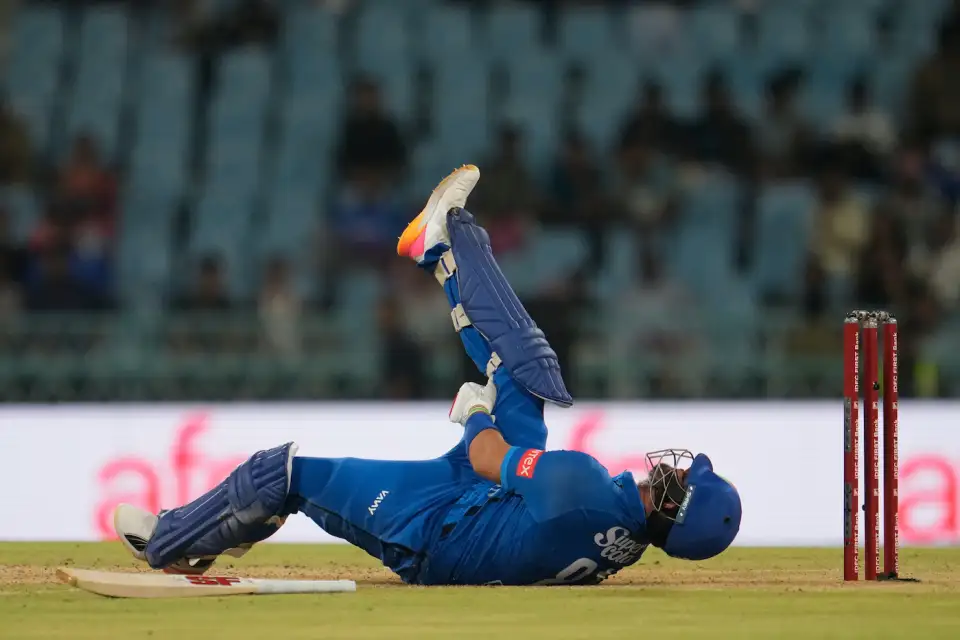
Welfare of players was in the spotlight during India’s current ODI series against Afghanistan as it is now being discussed how cricket can be played in extreme summer weather. It can serve as a means of experiment and personal performance for the series, but critics believe that the opportunities are outweighed by the dangers involved.
The second ODI that was played in Lucknow showed the difficulties that came with the heat. Afghanistan players got injured while in the field and had to step down twice in the match, with Darwish Rasooli, the batter, getting hurt. Issues with the body were another worry for Indian batters as captain Shubman Gill and wicketkeeper-batter Ishan Kishan appeared to be feeling cramps and fatigue in their attack.
A brilliant 154 was Gill’s first score but at the end of his innings the conditions did not seem to bother him. He was treated on the field and suffered from restriction of movement but did not get back in the field following his dismissal. Vice-captain Shreyas Iyer was forced to shoulder responsibilities during Afghanistan’s chase.
Hydration and heat stress are risks for injury, especially in long matches, and are a concern of experts. Raise of player fitness issues has grown sharper with India set to take on another opposition in an opponent’s hot and humid backyard of Chennai for their next ODI.
The series is well-timed on the World Cup calendar with India now facing England in an important white-ball assignment next month. A key injury suffered during the Afghanistan series in extreme summer may have an impact on suits against bigger games.
Although, because of scheduling, the best could not have been at the money time it ended up at, many watchers feel that the welfare of the players was an overriding consideration. The controversy has led to a renewed debate on ensuring international cricket is not played in such an extreme environment where risk to cricketers is considerably increased.