


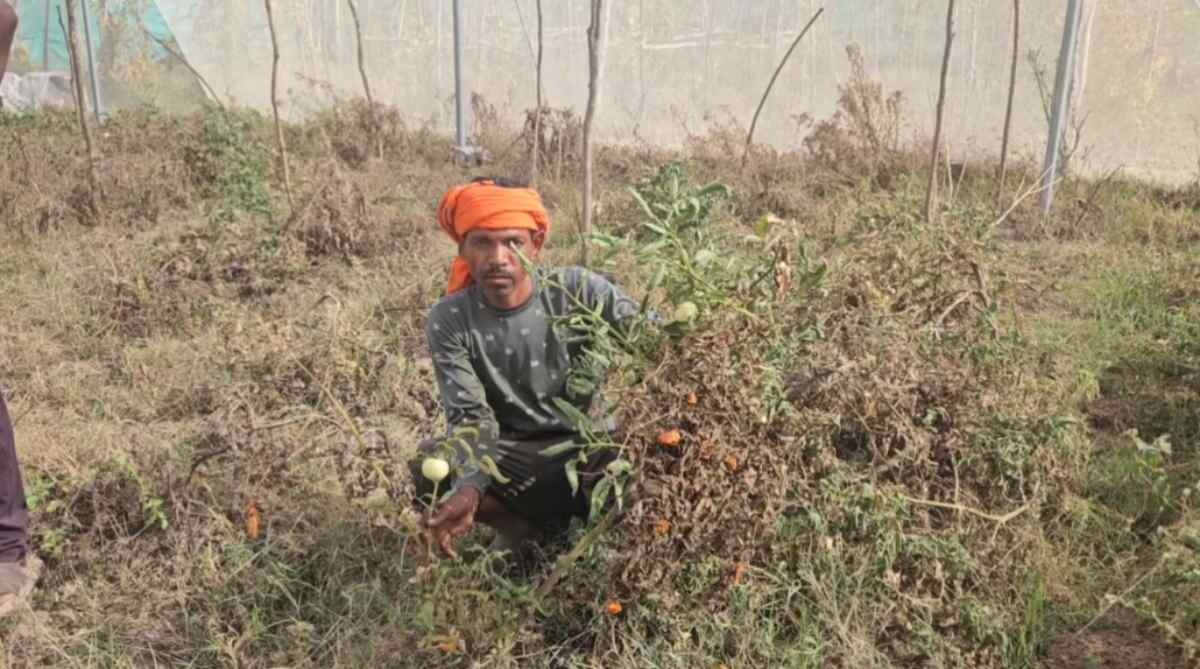
The heat wave that has gripped the Singrauli district has now posed a major challenge to the farmers as soil moisture is fast coming short and crops are also drying out, jeopardising agricultural production and livelihoods. Farmers in rural areas are facing potent heat and acute water crunch situation day and night while trying to save their standing crops and this in turn is spreading distress on the farms. This is creating distress among farmers in rural areas, who are suffering from severe water shortages and intense heat while trying to save their standing crops.
Singrauli’s villages are facing tough times due to the extreme heat. The soil in the fields becomes extremely hot by afternoon, with hot winds starting early in the morning. The moisture in the fields is rapidly disappearing, and farmers’ vegetable and pulse crops are taking a heavy beating due to the harsh weather conditions, according to farmers.
Some cultivators have disclosed that their fields get dry once again after irrigation within a few hours. Locals say that the heat was rarely seen before this, but during the day, it is now hard for farmers to stand in the fields. Currently, most agriculture work is being conducted during the morning and evening hours.
Complicating the situation is the increasing water scarcity in a number of rural areas in the district. Tubewells are beginning to break in several villages and ponds, and small water reservoirs are on the verge of Running Dry. Small-scale and marginal farmers are the worst hit, as they depend on farming to their entirety for their livelihoods.
“Tomato and vegetable farming used to sustain himself and his family,” one farmer told us, but the scorching heat had dispelled months of effort. The rain was gone from the fields, so were the tomato plants, and the production almost came to an end.
The heat wave’s effect goes beyond agriculture. Animal husbandry and daily life among the peasants in village areas have also been greatly influenced. The community doesn’t have anybody out in the afternoon because it is that hot.
The increasing temperatures and decreasing precipitation can become a big problem for future agricultural production, according to agricultural experts. They highlight the imminent requirements of providing irrigation assistance, conserving water, and timely government relief to save the crops, farmers’ livelihoods, and lush greenery of fields.