


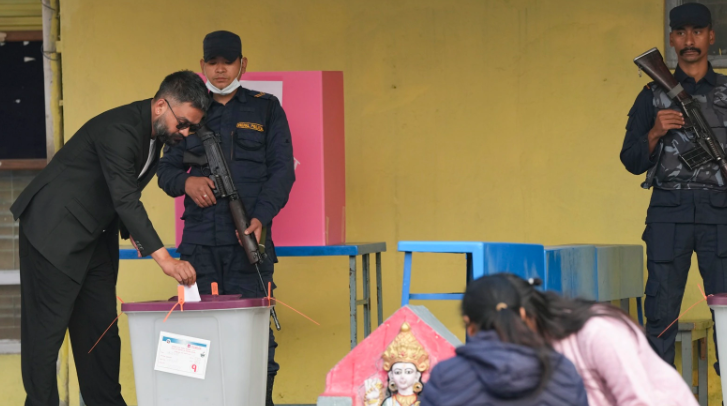
The general elections being held today in Nepal are considered crucial for the country’s political landscape. The Election Commission has stated that efforts will be made to declare the results of the 165 first-past-the-post (FPP) seats within 24 hours of ballot boxes being collected. However, counting for the 110 seats decided by proportional representation (PR) could take two to three days. If the Commission declares the results on time, it will be a significant change, as the 2022 elections took more than two weeks to finalize the results.
Nepal will vote today to elect a new government. 165 seats are up for grabs. The Election Commission says it will try to release the results within 24 hours of ballot boxes being collected. This is the first major election since the Gen-Z movement last year.
Nepal is divided into seven provinces: Koshi, Madhesh, Bagmati, Gandaki, Lumbini, Karnali, and Sudurpashchim. Voting is taking place today in all of these regions. Several major parties and new political groups are contesting the elections.
Major parties include the Rastriya Swatantra Party (RSP), Nepali Congress, Communist Party of Nepal-UML, Nepal Communist Party (NCP), Rastriya Prajatantra Party (RPP), Janata Samajwadi Party-Nepal (PSP-N), Janmat Party, and Unified National Party (UNP). Several smaller parties and independent candidates are also contesting the elections.
In this election, a direct contest is being seen between old veteran leaders and new emerging faces.
KP Sharma Oli: Former Prime Minister of Nepal and a prominent leader of the Communist Party (UML). Despite the controversies, he is trying to return to power.
Gagan Thapa: An influential leader of the Nepali Congress. His focus is on eliminating corruption and increasing employment.
Balen Shah: The most talked-about new face of this election. Formerly a popular mayor of Kathmandu, Balen Shah is a former rapper and civil engineer. He has a reputation as a reformist leader and is particularly popular with young and urban voters.
Nepal has a mixed electoral system, which includes both direct elections and proportional representation.
First-past-the-post: Parliament’s 165 seats are directly elected. The candidate with the most votes in each constituency wins.
Join our whatsapp group for Latest updates
Click Here for Chhattisgarh News
Click Here for Entertainment News