


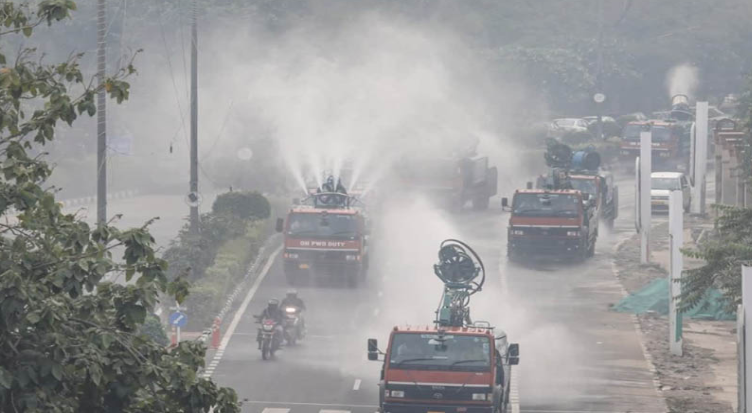
New Delhi: The 27th meeting of the Commission for Air Quality Management (CAQM) was held on Friday under the chairmanship of the Commission’s Chairman, Rajesh Verma, regarding the increasing air pollution in Delhi-NCR. The serious pollution situation was discussed in detail in the meeting, and several important decisions were taken.
The meeting also shared information about the reappointment of Dr. SD Attri as a full-time technical member of the Commission, as per the order of the Ministry of Environment. Officials said that this step is considered important to further strengthen pollution control measures at the technical level.
PM2.5 is the biggest pollutant
An important report by 33 experts was considered in the meeting of the Commission for Air Quality Management (CAQM) regarding the serious situation of air pollution in Delhi-NCR. This report was prepared on the instructions of the Supreme Court. Based on various studies from 2015 to 2025, the report stated that PM2.5 particles most affect Delhi’s Air Quality Index (AQI).
These fine particles remain in the air for a long time and are considered extremely dangerous for health. Experts said that the problem of pollution is not limited to local emissions only, but regional and transboundary movements like smoke and dust coming from the surrounding states also have a big impact. This means that external sources also play an important role in Delhi’s air.
Main sources of PM2.5 in winter
According to the expert report presented in the meeting of the Commission for Air Quality Management (CAQM), the following major sources were found to contribute to PM2.5 pollution: Secondary particulates (produced by transport, industry, power plants and biomass combustion) 27%, transport 23%, biomass combustion 20%, dust (road dust and construction) 15%, industries including thermal power plants 9%. It is clear from the report that vehicle smoke, industrial emissions, burning of stubble and other biomass and dust, all together are seriously polluting the air of the capital. Experts said that to control pollution, strict action is necessary simultaneously on all these sources, because improvement in one area will not solve the problem completely.
Join our whatsapp group for Latest updates
Click Here for Chhattisgarh News
Click Here for Entertainment News